
Buying land in Colorado Springs seems easy at first. You find a good spot, agree on a price, and start moving toward closing.
Then the issues start to show.
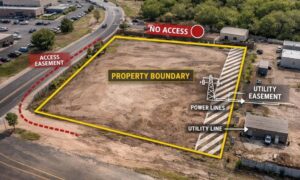
Some buyers only learn the real situation after the deal is done. A driveway they planned to use isn’t actually theirs. A utility line runs right through the middle of the lot. A neighbor has legal access across the property.
Now the plan changes. Costs go up. Delays follow.
This is where an ALTA Land Survey makes a real difference. It shows what you’re actually buying before you close, not after. During the ALTA land survey for due diligence, these kinds of access and easement issues tend to come out, often for the first time.
Why Access Can Be a Hidden Problem
Most buyers assume one thing right away.
“If the land touches the road, I can use it.”
That sounds simple, but it’s not always true.
Some properties rely on shared driveways or private roads. Others only have access through a neighboring parcel. On paper, everything may look fine. In real life, it can be very different.
That’s usually when people start taking a closer look before closing, often through an ALTA land survey before closing, especially if access isn’t clearly spelled out.
In growing areas like Colorado Springs, land gets split, sold, and reused all the time. Over time, access setups become more complicated.
You might see a clear path to the road. That doesn’t always mean you have the legal right to use it.
Easements Can Limit What You Build
Access is only part of the picture.
Easements are another big issue. These are legal rights that allow others to use part of your land.
Common examples include:
- utility lines
- drainage paths
- shared access routes
They don’t always stop a project, but they can change it.
A planned building may sit right on top of an easement. A parking lot may need to move. A simple layout can turn into a redesign.
These problems don’t show up in a basic site visit. They come from records and field checks done together.
Where Buyers Get Caught Off Guard
This happens more often than people think.
A buyer closes on a commercial lot. The plan looks solid. Then the engineer reviews the site and finds a problem.
The building footprint crosses a utility easement.
Or access depends on an agreement that was never recorded properly.
Or a neighbor uses part of the land and claims a right to keep using it.
At that point, options shrink. The deal is done. Fixing the issue takes time and money.
Some buyers try to push forward anyway. That usually leads to permit issues or redesign work.
How an ALTA Land Survey Helps Before Closing

An ALTA Land Survey brings everything into one clear picture.
It looks at:
- legal boundaries from title records
- visible features on the ground
- easements that affect the land
- access points and rights-of-way
- any overlaps or conflicts
This type of survey connects what’s written in documents with what actually exists on site.
That matters because many problems sit between those two.
A title report may list easements, but it won’t always show how they affect the land in real life. A site visit may look clean, but it won’t reveal legal rights.
An ALTA Land Survey puts both together so you can see the full situation.
Why This Matters More in Colorado Springs
Colorado Springs is growing fast. New projects come in. Older sites get reused.
That creates pressure.
Land that worked for one use may not work for another. Access routes that made sense years ago may not fit new plans.
On top of that, larger projects bring more attention. Neighbors care more. City reviews get stricter.
All of this means small issues turn into big ones quickly.
A missing access right or a poorly placed easement can slow down a project before it even starts.
Before Closing, You Still Have Control
Timing changes everything.
Before closing, you can act.
You can:
- ask the seller to fix a problem
- adjust the price
- change your plan
- walk away if the risk is too high
After closing, those choices disappear.
You own the issue. You pay for the fix. You deal with delays.
That’s why an ALTA Land Survey belongs in the due diligence phase, not after the deal.
When This Survey Makes the Most Sense
Not every property needs this level of detail. Some deals are simple.
But many are not.
An ALTA Land Survey is a smart move when:
- the property is for commercial use
- the site covers multiple acres
- access is not obvious
- the land has been divided or reused
- the project depends on a specific layout
These are the deals where small details can change the outcome.
A Smarter Way to Approach Land Deals
Land deals often move fast. It’s easy to focus on price and location.
But the real risk hides in the details.
Access rights. Easements. Conflicts between records and reality.
An ALTA Land Survey brings those issues into the open early.
That gives you time to think, adjust, and make a better decision.
In a place like Colorado Springs, where land use keeps changing, that early clarity can save months of work and a lot of money.