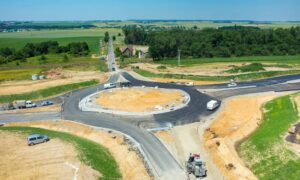
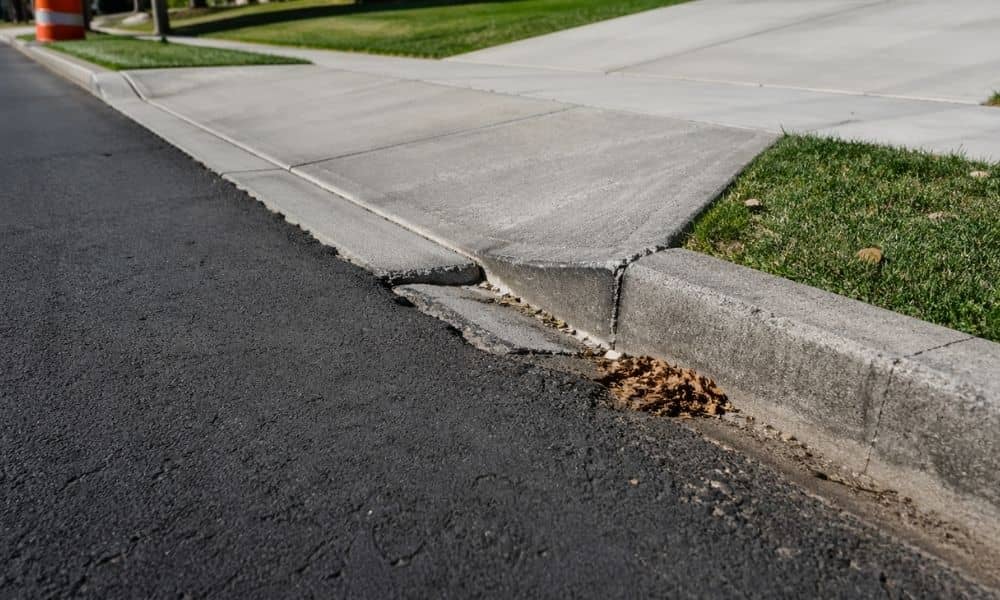
Roadwork is happening across Colorado Springs right now. Crews are repaving streets, fixing curbs, and updating sidewalks. At first, it all looks like a simple upgrade. The road feels smoother, and everything looks cleaner.
But even small changes in the street can create problems for nearby properties.
A road might sit a little higher than before. A curb can shift just enough to affect how a driveway connects. Sidewalk slopes can change in ways that aren’t obvious right away. Most people don’t notice these details until construction starts and something feels off.
That’s where getting a topographic survey for your site can really help. It shows how your property lines up with the street before any work begins, so you can avoid surprises later.
What Tie-In Issues Look Like on a Real Site
A tie-in is where your property meets public features like the curb or sidewalk. It seems like a small detail, but it can cause real problems if it’s not right.
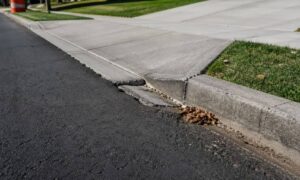
When something is off, you notice it right away. A driveway might feel too steep when you pull in. You might hit a bump where the concrete meets the curb. Sometimes the connection just looks uneven or out of place.
These issues don’t just affect how things look. They affect how people and vehicles move in and out of the property. They can also lead to failed inspections if the slope or connection doesn’t meet local standards. A lot of the time, these problems trace back to small details in the topographic survey measurements that were missed early on.
Why Roadwork Changes Everything at the Property Edge
When a road is repaved, crews often add new layers of asphalt. Even a small increase in height changes how the street connects to nearby properties.
If the street rises, the driveway angle becomes steeper. Vehicles may scrape at the bottom. Sidewalk connections may no longer meet slope limits.
If the street drops, the transition can feel like a dip. Water may start moving toward the property instead of away from it.
These are not rare situations. They happen often during normal road projects. The challenge is that property owners don’t always know the street has changed until they begin their own work.
What a Topographic Survey Shows Before Design Begins
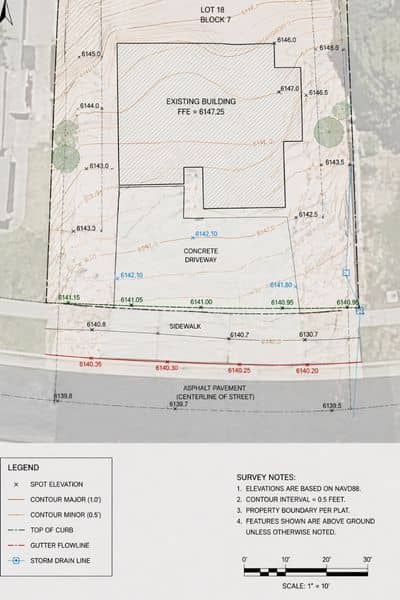
A topographic survey captures the real shape of the ground. It shows not just where things are, but how high or low they sit.
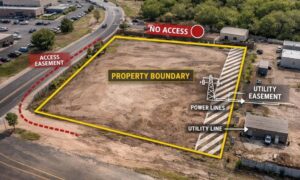
Near the street, that includes the curb, sidewalk, and pavement edge. It also includes the exact point where your driveway or entrance meets the public right-of-way.
With this information, engineers can see how everything connects before they draw any plans. They don’t have to guess the slope or assume the curb height. They work with real numbers.
That accuracy makes a big difference once construction begins.
How a Topographic Survey Helps Avoid Rework
Most costly problems on a site come from small mismatches. The design looks fine on paper, but it doesn’t match what’s actually on the ground.
When that happens, crews have to adjust on the spot. Sometimes they pour concrete, then realize the slope is wrong. Other times, they install a driveway that doesn’t meet the curb correctly.
Fixing these problems means tearing out work and doing it again. That takes time and adds cost.
A topographic survey helps prevent that. It allows the design team to match the driveway, sidewalk, and curb from the start. Everything connects the way it should, so the project moves forward without delays.
Where These Problems Show Up Most Often
Tie-in issues are common on properties close to the street, especially when changes happen nearby.
You’ll see them on commercial sites adding new entrances. They also show up on older properties being updated after nearby roadwork. Even small projects can run into problems if the connection to the street is not checked early.
Sites with visible slopes near the front edge face a higher risk. A small change in elevation can have a big impact on how the property connects to the road.
What Happens When the Survey Is Skipped
Skipping a topographic survey may seem like a way to save money at the start. In reality, it often leads to more expenses later.
A driveway may not meet the curb correctly. A sidewalk may fail inspection. Work may stop while changes are made.
Each fix takes time. Each delay adds cost. These problems are hard to avoid without accurate data from the beginning.
When to Order a Topographic Survey
Timing matters more than most people expect. A survey works best when it happens before design and construction.
It helps to order one before submitting site plans or making changes near the street. It’s also a smart step if roadwork is happening nearby, even if your project seems small.
Getting the right information early makes every step easier after that.
Why Local Knowledge Makes a Difference
Colorado Springs has a mix of flat areas and sloped terrain. Some streets sit higher than nearby properties, while others change elevation along the block.
A surveyor who knows the area understands these patterns. They know where to look for changes near curbs and sidewalks. That helps capture the right details the first time.
With accurate local data, engineers can design connections that work in real conditions, not just on paper.
A Better Way to Start Your Project
The edge of your property matters more than it seems. That’s where your site meets the public space, and that connection needs to work well.
A topographic survey gives you a clear view of that connection before anything is built. It helps prevent mistakes, keeps the project moving, and avoids costly fixes.
If your property sits near recent or ongoing road work, checking your elevations now can save you trouble later.