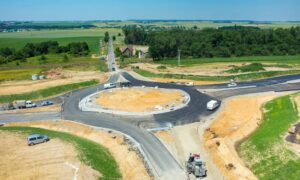
If you watched the recent buzz around Colorado’s big road work—especially the viral wildlife overpass story along the I-25 corridor—you probably saw the cute part: animals crossing safely. However, the real story hides under the headlines. Before crews pour concrete or move dirt, they need a boundary line survey mindset. In other words, they must know exactly where work can happen, where it must stop, and what lines nobody can “guess” without consequences.
That same idea matters for regular property owners too. The scale changes, but the risk stays the same.
The part that never goes viral: invisible lines that control everything
Big road projects look loud and simple from a distance. You see cones, machines, and traffic shifts. Yet the project team thinks about something quieter first: legal lines on the ground.
Here’s the key: a road project does not just follow a map. It follows right.
So, crews ask questions like: Where does the public right-of-way end? Where does private land begin? Where do utilities have rights under the ground? And where can workers enter without stepping into a legal mess?
Because of that, surveyors and engineers treat boundaries like guardrails. They don’t treat them like suggestions.
Road projects teach one lesson fast: people confuse three different “edges”
Most people picture one line: “my property line.” Meanwhile, major projects deal with multiple lines at once, and that’s where trouble starts.
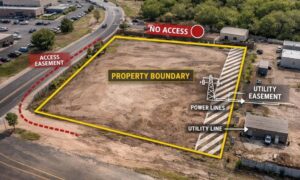
First, you have the property boundary. That line shows where ownership ends. It doesn’t care about fences, trees, or “what feels right.”
Next, you have the right-of-way. That area gives the public the right to build and maintain roads, shoulders, sidewalks, and sometimes drainage features. You might mow it. You might even landscape it. Still, the law may treat it as space the public can use.
Then, you have easements. An easement gives someone else a limited right to use part of land for a purpose, like utilities, drainage, or access. You may own the land, but you can’t block the easement without consequences.
So when a big road project moves forward, the team cannot rely on “close enough.” They need clarity. That need connects directly to a boundary line survey for homeowners—especially when you plan improvements near a street, a side yard edge, or a utility corridor.
What surveyors do behind the scenes on major road jobs
The wildlife overpass story went viral because it feels hopeful and visual. However, survey work makes the project possible long before anyone sees a finished structure.
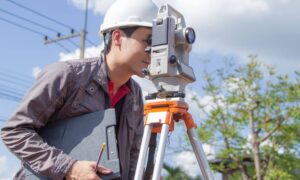
Surveyors start with research that sets the legal limits. They review plats, deeds, monument records, and right-of-way information. Then they identify what land the project can use and what land it must avoid. That work sounds boring, yet it prevents costly mistakes later.
After that, surveyors move into field verification. They look for evidence on the ground—monuments, corner markers, and other clues that tie legal records to real dirt. Sometimes records disagree with what they find outside. So surveyors resolve conflicts and build a defensible boundary picture the team can trust.
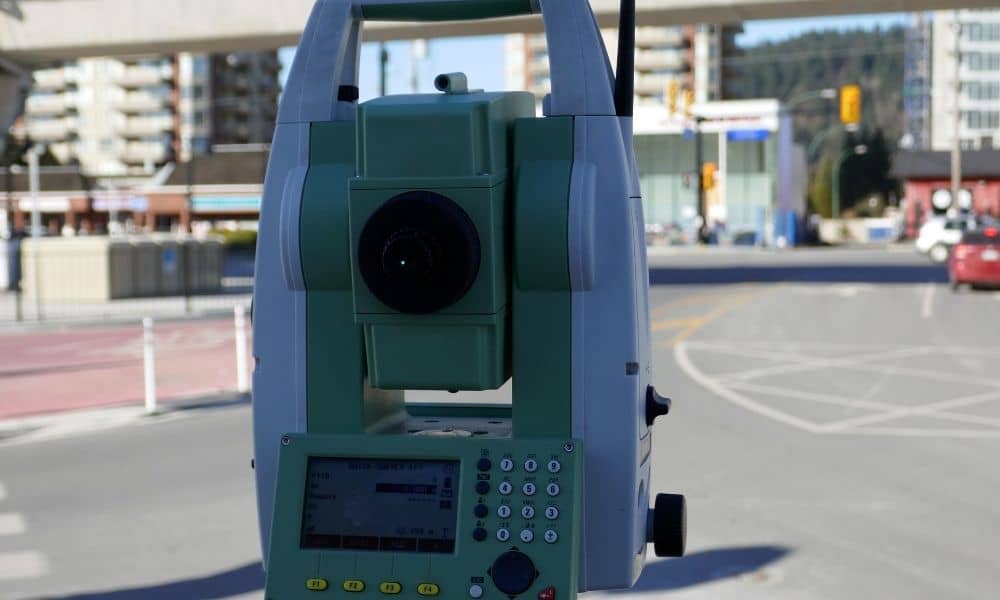
Then crews need a shared “language” for location. So surveyors establish control points—reliable reference points that keep every measurement consistent across a long corridor. Without that, one crew’s “here” will not match another crew’s “here,” and the project will drift.
Finally, surveyors guide construction with staking and layout. They set points that tell crews where to cut, where to pour, and where to stop. Later, they support as-built checks, which confirm that the work landed where the design intended.
In short, the viral part looks simple. The boundary work makes it real.
The Colorado Springs version: where these boundary problems hit homeowners
You may not build a wildlife overpass. Still, you face the same type of boundary confusion in everyday projects. In fact, many headaches start near the street.
Driveways and “frontage work” cause surprise problems
You might plan a new driveway apron, widen a parking pad, or add a second curb cut. That sounds straightforward. However, frontage areas often sit close to right-of-way limits and utility routes. So a small assumption can turn into a big change once someone checks the lines.
Also, you may think, “I’ve used this space for years.” Yet the law does not measure time the way people do. It measures rights on paper and evidence on the ground.
Utility flags show up, and suddenly your plans feel shaky
Maybe you wake up and see paint marks and little flags across your yard. You might feel annoyed. However, those marks often point to easements or planned work. If you build a wall, fence, or patio over an easement, you can lose that fight later—even if your project looks great.
So, when you plan improvements near those flagged areas, a boundary line survey conversation helps you avoid rework, removal, and stress.
Corner lots feel bigger, but they come with more “edges”
Corner lots can look simple because you see open space on two sides. Meanwhile, corner lots often interact with two street fronts, which means more right-of-way complexity. Because of that, owners sometimes place fences, walls, or landscaping in spots that trigger complaints or violations.
A boundary line survey approach keeps you grounded. It helps you separate “usable yard” from “legal limits.”
Slopes and retaining walls punish small mistakes
Colorado Springs has plenty of sloped sites. When you build a retaining wall, even a small shift matters. If your wall creeps over a line, you can’t “nudge it later.” You already poured it.
So, big projects treat boundaries like a first step. You should, too—especially before you commit to concrete.
Why phone maps and “GPS pins” can mislead you
A lot of homeowners try a mapping app first. That makes sense. It feels fast and cheap. However, maps and GPS pins don’t confirm property lines.
Trees, buildings, and even terrain can throw off GPS readings. On top of that, satellites move, signals bounce, and accuracy changes minute to minute. So a point that looks perfect today can shift tomorrow.
Professionals avoid that trap. They verify, cross-check, and tie measurements to control and evidence. That’s why major road projects don’t “wing it,” and that’s why a boundary line survey mindset beats guessing.
The simple takeaway
Colorado’s biggest road projects remind us of one truth: lines control outcomes. Even when the public shares the fun part—like wildlife crossing safely—the project succeeds because teams respect boundaries, right-of-way, and easements from day one.
So if you live in Colorado Springs and you plan anything near your edge—driveway work, a wall, a fence line, or changes near utilities—don’t rely on “it should be fine.” Instead, treat your project like a small version of a big one. Start with clear boundaries. A boundary line survey focus can save you from redesigns, delays, and awkward conversations later.