
If you’ve been on Reddit or following local headlines lately, you’ve probably seen the debate over the proposed Buc-ee’s in Palmer Lake. The project has stirred up heated arguments about water, traffic, and even an 80-foot sign. Yet behind all the noise lies a less flashy but very important tool: property line surveys. These surveys draw the official boundaries that decide who controls the land, how it can be used, and whether a project like Buc-ee’s gets the green light.
This story offers more than internet drama. It shows how survey work influences everyday life in El Paso County, from annexation fights to neighborhood peace of mind.
Why Palmer Lake Blew Up Online
Reddit threads in the past week have been full of frustration. Residents fear that Palmer Lake’s small water system won’t support a massive gas station. Others hate the idea of a glowing billboard dominating their mountain views. Many question the “flagpole” annexation that would stretch the town’s boundaries in a thin strip just to reach the site.
These complaints may sound like politics or personal taste, but they all connect back to land boundaries. Where does one town end and another begin? Who has the right to approve development? How far can a sign sit from a property edge? Each answer depends on a certified survey. Without one, there is no legal clarity.
How Property Line Surveys Shape Annexation
At first glance, annexation looks like a political decision. Town leaders vote, residents push back, and headlines follow. But long before a ballot or council meeting, surveyors step in to map the land.
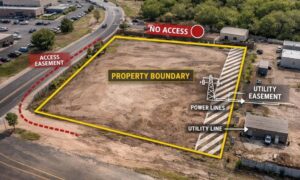
A property line survey defines the exact edges of a parcel. For annexation, those lines get stitched into larger plats that show how a city or town would expand. In Palmer Lake, the controversy focused on a “flagpole” strip—a narrow connection of land drawn to attach the Buc-ee’s site to town limits. Surveyors marked those lines on the ground and put them on record. That technical step gave the annexation proposal its legal footing.
If the survey is wrong, everything else falls apart. A misdrawn line can place a project outside of jurisdiction, invalidate a zoning plan, or expose the town to lawsuits. For residents, that means survey accuracy is not just a formality. It’s the first safeguard against bad planning.
The Role Surveys Play in Local Concerns
Water, traffic, and viewsheds—these hot-button issues all trace back to surveys:
- Water rights depend on mapped service areas. A survey shows whether pipes and easements cross public or private land.
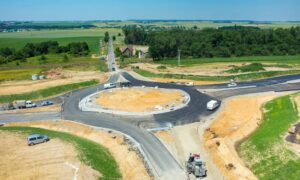
- Traffic studies rely on survey-based topographic data. Engineers need exact grades and widths to plan turn lanes or drainage.
- Signs and lighting have setback rules. Only a survey proves whether a towering sign stands inside or outside the legal boundary.
In each case, survey evidence keeps debates grounded in facts rather than rumors. When people argue online, the survey map is often the only document that can settle the issue.
Lessons for Homeowners and HOAs
You don’t need to own a giant commercial property for this to matter. Annexation fights like Palmer Lake’s show how survey lines affect anyone with a home near new development.
- For homeowners: If a project borders your lot, ask to see the survey plat. It tells you exactly where construction will happen and whether buffers or setbacks protect your yard.
- For HOAs: A property line survey can confirm easements, trails, or open spaces promised in a developer’s plan. Having that document helps when negotiating with builders or town councils.
- For small developers: Ordering a survey early prevents surprises. A clear map of your property lines builds trust with neighbors and speeds up approval with city staff.
Think of surveys as your proof in hand. Without them, you’re arguing on shaky ground.
Why Buc-ee’s Strikes a Nerve
Part of the reason the Buc-ee’s proposal blew up is emotional. People value small-town charm and mountain views. A huge commercial station feels out of place. But the technical layer—who owns what land and where the boundaries lie—is just as important.
This controversy highlights a truth: big fights often start with small lines. A property line survey might look like a dry drawing, but it holds the power to guide zoning, influence water rights, and even protect scenic corridors.
For residents, the Buc-ee’s debate is a reminder to pay attention. Annexations happen quietly until they don’t. By the time the public sees a glowing sign, the survey work has already decided where that sign can stand.
What This Means for Colorado Springs and Beyond
Palmer Lake isn’t the only place facing growth pressure. Colorado Springs continues to expand, and annexations around the county will only increase. As cities grow, conflicts over water, traffic, and land use will follow. Property line surveys are the backbone of these decisions.
When you hear about rezoning, buffer zones, or setbacks, remember that surveyors supplied the data. Their maps are the blueprints that councils, courts, and communities lean on. If you want to stay ahead of development, watch for the surveys that define what comes next.
Takeaway: Don’t Wait for the Next Viral Debate
The Palmer Lake Buc-ee’s saga shows how one survey line can spark weeks of arguments online. Yet it also proves how vital it is to understand property boundaries before problems erupt.
Whether you’re a homeowner protecting your yard, an HOA guarding shared space, or a builder planning the next project, the lesson is the same: start with a property line survey.
It’s not glamorous. You won’t see survey stakes trending on Reddit. But when the future of your neighborhood is at stake, those markers in the ground are what count.
Final Word
Property line surveys may feel like technical details, yet they play a powerful role in community debates. The Palmer Lake controversy is just the latest example. From annexations to backyard fences, these surveys protect rights, prevent disputes, and give residents a voice rooted in fact.
No matter where you live, don’t wait for the next big dispute to take you by surprise. A clear property line survey today can save you from confusion, conflict, and costly mistakes tomorrow.