
A recent viral property line dispute blew up online after neighbors started fighting over boundary markers. People argued in the comments. Some said, “Just move the stake.” Others said, “It’s your land — do what you want.” However, almost none of them explained the real issue. Boundary markers are not decorations. They are not suggestions. They connect to legal property records. When someone moves or removes them, problems follow fast. That’s exactly why a licensed land surveyor matters. Before you touch any marker, stake, or pin, you need to understand what it means — and what it can affect.
Why Property Line Disputes Go Viral So Often
Property fights spread quickly online because they feel personal. After all, your land feels like your space. So when a marker appears near your fence or driveway, it can feel threatening.
But here’s the problem. Social media advice often sounds confident — yet it’s wrong.
For example, many commenters say:
- “Those are just construction sticks”
- “If it’s on your side, pull it”
- “Fences prove ownership”
In reality, none of those statements hold up legally. Still, people act on them. Then disputes grow. Projects stop. Lawyers get involved.
Instead, one call to a licensed land surveyor often prevents the whole mess.
What Boundary Markers Actually Mean
Many homeowners see flags or stakes and assume they show rough lines. However, markers usually connect to measured positions tied to maps, deeds, and coordinates.
There are different types:
Temporary stakes often guide construction layout. Crews use them for grading, utilities, or building corners.
Survey flags usually highlight measured points during field work.
Permanent monuments matter the most. These include metal rods, capped rebar, stone markers, or set pins. A licensed land surveyor places or confirms them based on records and field evidence.
Therefore, when someone moves one, they don’t just shift a stick — they disturb a legal reference point.
What Happens When Someone Moves a Marker
At first, moving a marker feels small. However, the ripple effects grow fast.
For instance, you might install a fence in the wrong spot. Later, your neighbor orders a survey. Now the fence crosses the line. You pay to remove and rebuild it.
Or maybe a driveway edge crosses into the next parcel. That can delay a sale or break a loan approval.
Sometimes, missing markers force a full retracement survey. That costs more than a basic check would have cost in the first place.
Worse yet, disputes between neighbors often turn emotional. Once that happens, simple fixes become hard conversations.
So instead of guessing, smart owners call a licensed land surveyor early.
Situations Where You Should Call a Licensed Land Surveyor First
Many clients wait too long. They call after the mistake instead of before it. However, you can avoid that path.
You should call a licensed land surveyor if you plan to:
- build a fence
- add a driveway
- install a retaining wall
- build near a lot edge
- clear trees near boundaries
- buy or sell property
- settle a line disagreement
- replace missing corner markers
Also, if you see new stakes appear, don’t panic — but don’t touch them either. Instead, verify their purpose.
What a Licensed Land Surveyor Actually Does
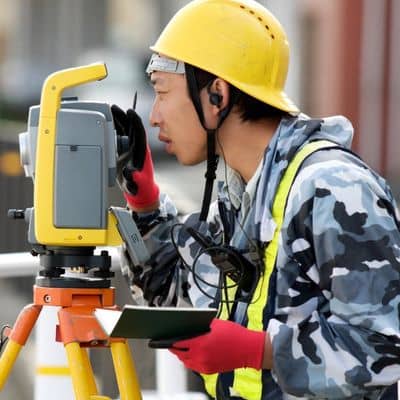
Some people think surveyors just “measure land.” In truth, their work goes deeper.
First, they research records. They review plats, deeds, prior surveys, and subdivision maps.
Next, they visit the site. They search for existing monuments and physical evidence. They measure angles and distances with precise equipment.
Then, they compare record data with field facts. When conflicts appear, they resolve them using professional standards.
Finally, they mark or confirm boundary corners and produce documentation.
Because of that process, their conclusions hold weight. Courts, title companies, and cities trust their work.
That level of confidence does not come from a phone app or a tape measure.
Why DIY Property Line Checks Fail So Often
Today, many apps show parcel lines on aerial maps. They look clean and exact. However, they are only estimates.
GPS on phones can drift several feet. Old parcel layers can also shift. In irregular lots, errors grow even larger.
Moreover, terrain affects accuracy. Slopes, trees, and buildings distort readings. That matters in places with varied topography and older subdivisions.
So while apps help with rough views, they cannot replace a licensed land surveyor.
What To Do If You Think a Marker Was Disturbed
Let’s say you notice a bent rod, missing cap, or pulled stake. Don’t ignore it — but stay calm.
First, take photos of the area.
Next, avoid moving anything further. Even small changes can erase evidence.
Then, check your closing papers or prior survey if you have one.
After that, contact a licensed land surveyor and explain what you found. They can inspect and restore positions if needed.
Most importantly, avoid arguing with neighbors on the spot. Facts solve more problems than emotions.
Cost vs Consequence: The Smart Comparison
Some owners hesitate because of cost. That’s understandable. However, compare the numbers.
A survey visit costs far less than:
- rebuilding a fence
- relocating concrete
- delaying a closing
- fighting a legal claim
- redesigning a site plan
In other words, verification costs less than correction.
Therefore, hiring a licensed land surveyor works like insurance. You hope you won’t need the proof — but you feel relieved when you have it.
The Viral Story Is Entertainment — Your Property Line Is Not
Online property disputes attract clicks because they feel dramatic. However, real land boundaries affect money, permits, and ownership rights.
So don’t let internet advice guide your decisions. Don’t pull stakes. Don’t shift markers. Don’t assume fences prove lines.
Instead, get facts from a licensed land surveyor.
That one step protects your project, your budget, and your peace with the people next door.