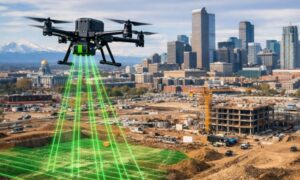
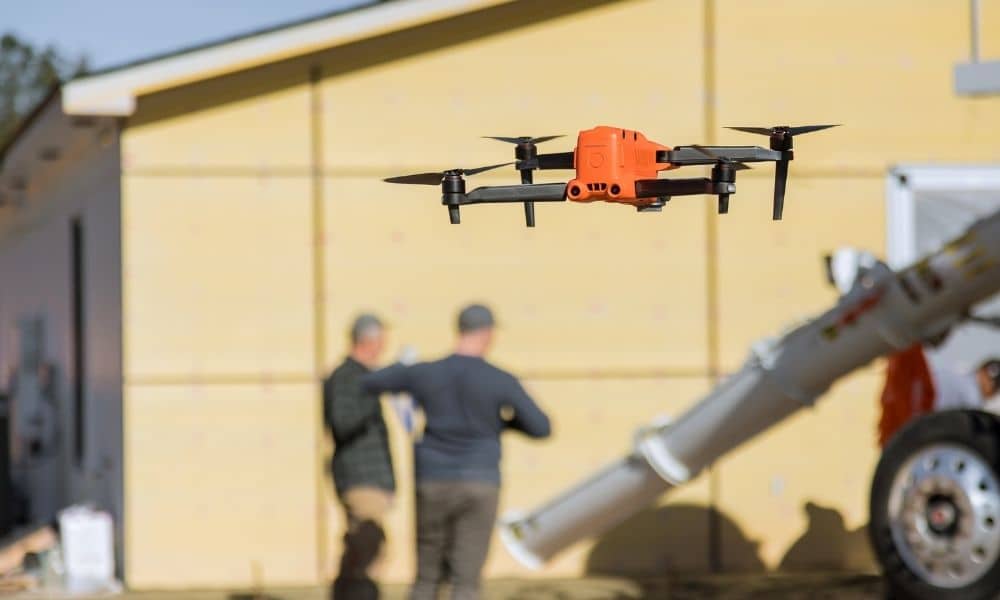
Drone land surveying has changed how construction teams collect site data. A drone can map large areas fast, capture clean images, and create detailed surface models. Because of that, many contractors and developers expect drone data to drop straight into their plans without issues.
However, that does not always happen. On many construction sites, the drone map looks sharp and accurate, yet it does not line up with staking, grading plans, or machine control files. When that happens, frustration follows. Crews question the data. Schedules slip. Costs rise.
So why does this happen so often? The answer usually has nothing to do with the drone itself.
Accuracy and alignment are not the same thing
First, it helps to clear up a common misunderstanding. Accuracy and alignment are not the same. Drone land surveying can be very accurate and still fail to line up on a construction site.
Think of it this way. A measuring tape can be correct, but if you start measuring from the wrong point, every mark will be off. Drone data works the same way. The measurements can be precise, yet the entire dataset can sit in the wrong location compared to the site layout.
Because of this, crews often see a consistent shift. Everything appears offset by the same amount. That pattern is the clue that the problem lies in setup, not data quality.
Why construction sites use local grids

Next, you need to understand how construction sites handle coordinates. Many sites do not use statewide or regional coordinate systems. Instead, they rely on a local grid.
A local grid is a site-specific coordinate system. Surveyors design it to fit the project. The numbers stay smaller and easier to manage. Machine control systems also work better with it. As a result, grading and staking crews depend on this local setup every day.
Meanwhile, drone land surveying often defaults to a different system. Many drone workflows process data in broader coordinate systems unless someone sets them up to match the site grid. When those systems differ, alignment issues appear.
Where drone land surveying workflows break down
Problems usually start before the drone ever takes off. For example, the drone team may not receive the local grid details. In other cases, the site grid may still be in flux when the flight happens. Sometimes, teams assume they can “shift” the data later to fix any mismatch.
Each of these situations creates risk. When the drone data does not match the site grid, crews must stop and sort it out. That pause costs time. In tight schedules, even small delays matter.
Why this issue shows up more often today
This problem has grown more common in recent years. Drone land surveying now plays a bigger role in construction than ever before. Teams use drones for volume checks, progress tracking, and design coordination.
At the same time, projects move faster. Multiple teams handle different parts of the workflow. One group sets control. Another flies the drone. A third team handles design. Without clear coordination, gaps form.
Because of this, alignment errors show up more often. The technology works well, but the workflow does not always keep up.
Common mistakes that cause misalignment
Several mistakes appear again and again on construction sites.
First, teams fly drones before final site control is locked in. That choice almost guarantees rework later.
Second, the drone operator may never receive the local grid information. Without it, the data cannot match the site layout.
Third, teams treat drone land surveying as a standalone service. They view it as a map product instead of part of the survey process.
Finally, no single professional takes responsibility for alignment. When no one owns that task, errors slip through.
What construction teams should ask before hiring drone services
To avoid these problems, clients need to ask the right questions early. For instance, ask if the drone data will match the site grid exactly. Also, find out who verifies the alignment before delivery.
In addition, confirm that the deliverables will work with staking and machine control. Ask who handles changes if the site grid shifts. These questions protect the schedule and the budget.
Most importantly, ask if a licensed land surveyor oversees the drone work. That oversight often makes the difference.
Why surveyor-led drone land surveying works better
When a licensed surveyor manages drone land surveying, the process stays connected from start to finish. The surveyor handles site control, understands the local grid, and ensures consistency across all deliverables.
As a result, drone data fits into the construction workflow instead of fighting it. Crews trust the surfaces. Engineers trust the volumes. Everyone moves forward with confidence.
This approach also reduces disputes. When data lines up the first time, projects avoid costly corrections.
Why alignment matters so much on active construction sites
On construction sites, small errors grow fast. A few inches of offset can throw off grading. Drainage patterns can change. Utility conflicts can appear.
In areas with varied terrain, these issues matter even more. When slopes and elevations change quickly, alignment errors become obvious. That is why drone land surveying must connect tightly to the ground setup.
The real lesson: most problems start before flight
Many people assume drone problems come from the air. In reality, most issues start on the ground. Setup, coordination, and communication decide success long before the drone launches.
When teams plan correctly, drone land surveying delivers powerful results. It saves time, improves safety, and supports smarter decisions. However, that value only appears when the data lines up with the site.
Final thoughts
Drone land surveying continues to shape modern construction. Yet technology alone does not guarantee success. Alignment matters just as much as accuracy.
If you want drone data that fits your construction site, focus on the setup. Ask the right questions. Work with professionals who manage the full survey process. When everything connects from the start, the results speak for themselves.