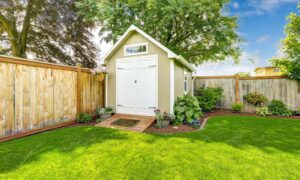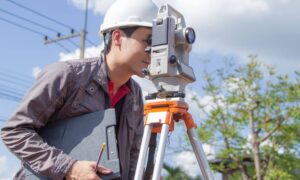

You finally decide to add a shed to your backyard. It feels simple. You pick a spot, clear the ground, and plan to set it in place over the weekend. At first, it seemed like an easy project. After all, it’s your property. However, many homeowners run into problems right at this stage. A neighbor questions the placement. The city flags a setback issue. Or worse, you find out the shed sits partly outside your boundary. That’s when the question hits hard: Do you actually need a home survey before building a shed?
The answer is not always yes—but it’s also not something you should ignore. Many homeowners move forward assuming everything is in the right spot, without really knowing their property lines before they build.
What Most Homeowners Get Wrong About Shed Placement
Most people think they can “eyeball” their property lines. If there’s a fence, they trust it. If the yard looks even, they assume it’s correct.
However, that’s where mistakes begin.
Fences are not always built on the true boundary. Over time, markers can move, disappear, or get buried. Even worse, online maps can look accurate but still be off by several feet.
So while your yard may look clear, the actual boundary could tell a different story. Because of that, placing a shed without checking first becomes a gamble—especially if you’re not quite sure and can’t clearly see exactly where your boundaries are.
The Rule That Changes Everything in Colorado Springs
In Colorado Springs, shed rules often depend on size. Smaller sheds—usually under around 200 square feet—may not require a full permit.
Because of this, many homeowners assume they can place the shed anywhere.
But that’s not true.
Even without a permit, your shed must still follow:
- Property lines
- Setback distances
- Easement restrictions
So the real rule is simple:
If your shed placement depends on where your boundary is, you need to know that boundary with certainty.
That’s exactly where a home survey comes in.
When You Might Feel Safe Skipping a Home Survey
There are situations where a full home survey may not seem necessary.
For example, you might plan to place your shed far from the edges of your yard. Maybe the lot is wide, flat, and easy to understand. In those cases, it feels safe to move forward without extra steps.
However, even then, there’s a hidden risk.
What feels “far enough” may not be accurate. A few feet off can still put your structure too close to a line or inside a restricted area.
So while skipping a home survey might work in rare cases, it still relies on guesswork—and that’s where problems start.
When a Home Survey Becomes the Smart Move
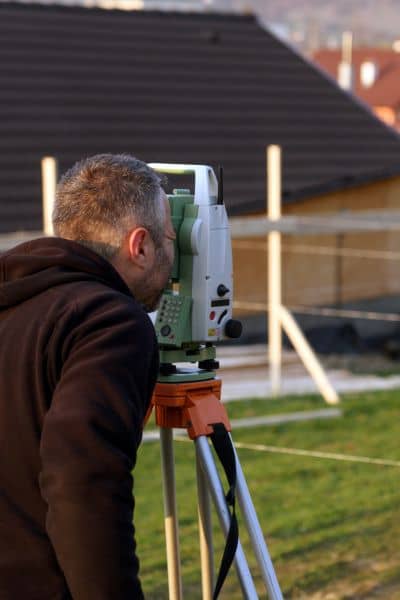
Now let’s look at the situations where a home survey clearly makes sense.
If your shed sits anywhere near a property line, you need exact measurements. The same goes if you’re building next to a fence or another structure. In these cases, small errors can quickly turn into big issues.
Also, many Colorado Springs properties have slopes or drainage paths. These features affect where you can build, even if they are not obvious at first.
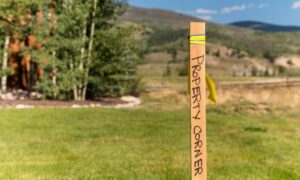
And then there’s the simplest reason of all: you can’t find your property markers.
When you don’t know where your corners are, placing a shed becomes guesswork. A home survey removes that uncertainty and gives you clear, reliable boundaries.
The Hidden Problem: Easements and Setbacks
Even if you stay inside your property, you can still run into trouble.
That’s because of easements and setbacks.
An easement is a part of your land that serves a purpose—like drainage or utility access. You may not see it on the ground, but it still exists.
At the same time, setbacks require you to keep your structure a certain distance from your property line.
So even if your shed is technically on your land, it might still break the rules.
This is one of the most common mistakes homeowners make.
A home survey shows these limits clearly. It tells you where you can safely build—and where you cannot.
Why Guessing Costs More Than Checking
At first, skipping a home survey may feel like saving money. However, the risks add up quickly.
A neighbor could question your shed’s placement. Without proof, you have no way to confirm your side. That can lead to disputes that drag on.
Later on, when you decide to sell your home, the issue might surface during inspection. Now you have to fix it before closing.
In some cases, homeowners even have to move or remove the shed entirely.
So instead of saving money, skipping a home survey often leads to higher costs and stress.
A Simpler Option You Might Not Know About
Not every situation requires a full, detailed survey.
Sometimes, a property line locate is enough. This service marks your boundaries so you know exactly where your lot begins and ends.
For a simple shed project, that may be all you need.
However, if anything feels unclear—like slopes, missing markers, or nearby structures—a full home survey is still the safer option.
The key is choosing the right level of certainty before you build.
The Bottom Line for Homeowners
Building a shed should be simple. However, property rules add a layer that many people overlook.
You may not always need a full home survey. But you do need to know your boundaries, your setbacks, and any limits on your land.
So instead of guessing, take a moment to confirm.
Because in the end, a home survey is not just about lines on a map. It’s about protecting your property, your investment, and your peace of mind.
If you’re planning a shed, it’s worth getting clarity first—before a small project turns into a big problem.