Buying or selling commercial property should feel simple. However, one small boundary problem can slow everything down. A fence sits a little too far over. A parking lot stripe crosses a line. A wall touches an easement. Suddenly, lenders ask questions. Title companies raise concerns. Closings get delayed. This is where a cadastral surveyor becomes very important. Under ALTA Table A Item 20, documenting encroachments requires care, clear thinking, and exact measurements. More importantly, it requires someone who understands how small boundary details can affect large financial decisions.
Why Encroachments Matter More Than People Realize
An encroachment happens when something crosses a legal boundary or enters an easement without proper rights. At first, it may not seem serious. After all, a fence off by a foot does not look like a big deal.
However, real estate deals depend on certainty. Lenders want a clean title. Buyers want confidence. Investors want to lower risk. Therefore, even small boundary overlaps can cause concern.
Because of this, ALTA Table A Item 20 requires detailed reporting. Instead of saying something “looks close,” a cadastral surveyor must measure it and explain it clearly.
This protects everyone involved.
Understanding ALTA Table A Item 20 in Simple Terms
ALTA surveys follow national standards used in commercial real estate. Table A lists optional items that buyers, lenders, or attorneys may request. Item 20 focuses on visible encroachments and improvements that affect boundaries or easements.
When Item 20 is selected, the cadastral surveyor must:
- Look for visible boundary conflicts
- Measure the exact overlap
- Show it clearly on the survey drawing
- Explain it in writing
In short, this is not a quick check. It is a careful review.
Because lenders and title companies depend on this information, accuracy is very important.
The Process Starts with Boundary Research
Before going into the field, a cadastral surveyor studies the property’s legal records. This includes deeds, plats, easements, and older surveys. Without this research, field measurements would not make sense.
Next, the surveyor confirms the boundary markers on the ground. These markers help define the true property line. If the boundary line is wrong, then the encroachment review will also be wrong.
Therefore, solid boundary control always comes first.
Fieldwork: Where Problems Become Clear
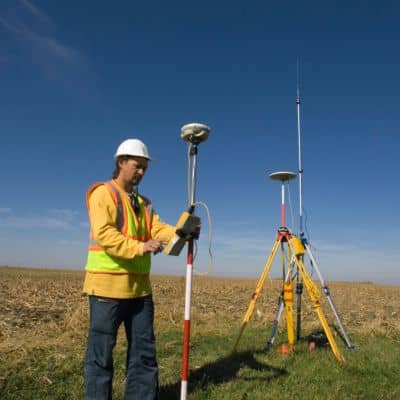
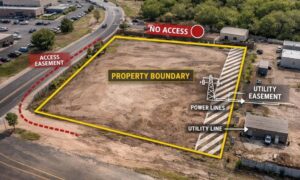
After confirming the boundaries, the cadastral surveyor collects detailed measurements. They look at fences, walls, buildings, curbs, parking areas, and utility structures.
Instead of guessing distances, the surveyor uses precise tools to measure exact offsets. For example, a fence may cross a boundary by 0.80 feet. A building corner may sit inside an easement by 1.2 feet.
These numbers matter. Even small overlaps can worry lenders.
In addition, easements need close attention. Many owners forget that building inside an easement can create legal trouble, even if no boundary line is crossed.
Because of this, careful fieldwork is key.
Turning Measurements Into Clear Information
Collecting data is only part of the job. The real value comes from how the cadastral surveyor presents it.
Under Table A Item 20, the survey drawing must show encroachments clearly. The surveyor labels the condition, shows the measured distance, and identifies the affected boundary or easement. Anyone reading the survey should understand it quickly.
At the same time, the surveyor writes a short summary. This summary lists each encroachment and how far it extends. Attorneys and lenders review this section to decide if the issue creates risk.
Clear reporting helps deals move faster.
A Real Example of Why This Matters
Imagine a buyer plans to purchase a small shopping center. During the ALTA survey, the cadastral surveyor finds that part of the parking lot extends two feet into a neighboring parcel.
Without clear documentation, this problem might appear right before closing. The lender might pause funding. The title company might refuse to remove an exception. The deal could stall.
However, because the surveyor documented the encroachment early, the buyer fixes the issue in time. They work out a simple agreement. The lender receives proof. The closing stays on schedule.
In this case, careful documentation protects time and money.
What Happens If Encroachments Are Missed
Not every survey handles Item 20 with care. When details are unclear, problems follow.
Buyers may face disputes later. Neighbors may question property lines. Lenders may delay approval. In serious cases, legal action may follow.
Therefore, proper documentation does more than meet a requirement. It protects the future of the property.
A skilled cadastral surveyor understands this responsibility.
Why Experience Matters
Encroachment reporting requires more than measuring land. A cadastral surveyor must understand boundary rules, easement rights, and how lenders view risk.
They must also explain findings clearly. Property owners often feel confused by legal terms. Clear explanations build trust and reduce stress.
When choosing a cadastral surveyor, clients should look for someone who combines technical skill with clear communication. The right professional does more than draw lines. They protect investments.
Final Thoughts
ALTA Table A Item 20 may sound complex, but its purpose is simple. It protects buyers, lenders, and investors from hidden boundary problems.
Through research, careful fieldwork, and clear reporting, a cadastral surveyor provides confidence where doubt once existed. As a result, real estate deals move forward smoothly.
Small boundary overlaps can lead to large financial trouble. However, when documented correctly, they become manageable issues instead of deal breakers.
In commercial real estate, clear information builds trust. And that trust begins with a qualified cadastral surveyor.