How To Find Your Property On FEMA’s Flood Insurance Rate Maps

What are FEMA flood maps?
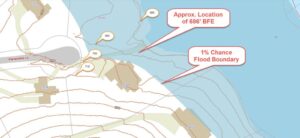
FEMA’s Flood Insurance Rate Maps (FIRMs) or just Flood Maps are provided after a flood risk assessment has been completed or updated for a community.  This study is known as a Flood Insurance Study.  The FIRM gives you the Base Flood Elevations (BFEs) and insurance risk zones in addition to floodplain boundaries.  The FIRM may also show a delineation of the regulatory floodway.

Once the “insurance risk zone”  (commonly referred to as the flood zone) is determined, actuarial rates, based on these risk zones, are then applied for newly constructed, substantially approved, and substantially damaged buildings.  FEMA uses these rates to determine the insurance rate you will pay for flood insurance

FEMA’s Digital Flood Maps

FEMA discontinued the production and distribution of paper flood maps in 2009 as part of its Digital Vision Initiative. This affected all the Flood Maps, boundary information, and study reports. However, clients can still view the products for free through their website or buy them in digital format.

To view these flood maps online, go to FEMA’s Map Service Center and key in your address (hi-lited area shown here) search for your home.  This will prompt you to then select the map that covers your area.  The Flood Maps are somewhat cumbersome to use online. It is best to go through the tutorial on the bottom right of the address search page for an easier and more effective use of the GIS map.


author avatar
Surveyor

More Posts

Aerial view of a commercial site with alta land survey boundary overlay used to verify property lines before closing
alta survey
Surveyor

The Timing of an ALTA Land Survey Can Make or Break a Smooth Closing

Most people buying commercial property focus on inspections, price, and financing. Timing rarely comes up. But when you order and complete an ALTA land survey often determines whether a deal closes on schedule or falls apart at the last minute. The survey connects to several other steps in the transaction.

Read More »
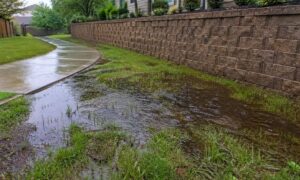
Water pooling in a backyard next to a retaining wall after rain
civil engineering
Surveyor

Neighbor’s Retaining Wall Flooding Your Yard? 

You step outside after a storm and notice something off. Water sits in your yard longer than it used to. The ground feels soft. Then you see it. The water is coming from the direction of your neighbor’s retaining wall. At first, it feels like a simple issue. Maybe it

Read More »
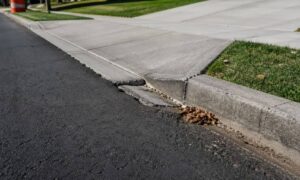
Uneven driveway and curb connection after roadwork showing height mismatch in a residential street
land surveying
Surveyor

How a Topographic Survey Fixes Curb and Sidewalk Tie-Ins

Roadwork is happening across Colorado Springs right now. Crews are repaving streets, fixing curbs, and updating sidewalks. At first, it all looks like a simple upgrade. The road feels smoother, and everything looks cleaner. But even small changes in the street can create problems for nearby properties. A road might

Read More »
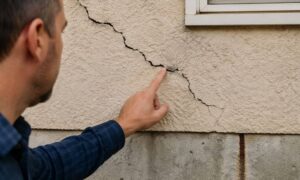
Homeowner examining a wall crack inside a house, showing signs that a structural engineer may be needed to assess foundation damage
civil engineering
Surveyor

When Foundation Cracks Mean You Need a Structural Engineer

You notice a crack on your wall. Then another one shows up near a window. A few weeks later, a thin line runs along the floor. At first, it felt small. Maybe just normal settling. But then you start wondering if something bigger is going on. This happens a lot

Read More »
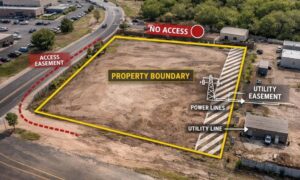
Aerial view of a commercial site showing boundary lines, access routes, and easement areas identified in an ALTA land survey
alta survey
Surveyor

Catch Access Issues Early with an ALTA Land Survey

Buying land in Colorado Springs seems easy at first. You find a good spot, agree on a price, and start moving toward closing. Then the issues start to show. Some buyers only learn the real situation after the deal is done. A driveway they planned to use isn’t actually theirs.

Read More »

What a Boundary Survey Confirms Before a Fence

Fence placement is one of those decisions that seems obvious—until it isn’t. What looks like a clear edge in your yard may not reflect the actual property line, and that gap between assumption and reality is where most problems begin. This is why many homeowners turn to a surveyor for

Read More »